Many buyers start a smart nightstand inquiry by asking for the price of one attractive model. That is understandable, but it usually leads to weak quotation results. For importers, wholesalers and online furniture sellers, a stronger first step is to plan a small range: one entry model, one core volume model and one differentiated feature model.
This article explains how to build that first assortment before sending a factory RFQ. It is written for B2B buyers comparing bedside tables, smart nightstands and private label bedroom furniture, not for retail consumers choosing one piece for a home.
Start with the sales channel, then choose the smart functions
A smart function only helps if the target channel can explain and support it. For marketplace sellers, LED light, wireless charging and clear product photos often matter more than a complex specification list. For furniture wholesalers, stable carton size, repeatable finish and low after-sales risk may be more important than adding every electronic option.
Before browsing the full Nightstand Plus product catalogue, define where the range will be sold: retail store, ecommerce, apartment project, hotel supply, distributor catalogue or private label launch. That decision should guide width, finish, functions, carton strength and sample approval requirements.
A practical three-level SKU structure
For a first import order, a simple three-level structure is easier to quote and easier to test in the market:
- Entry SKU: a compact model with clean storage, controlled cost and a finish that works across several bedroom styles.
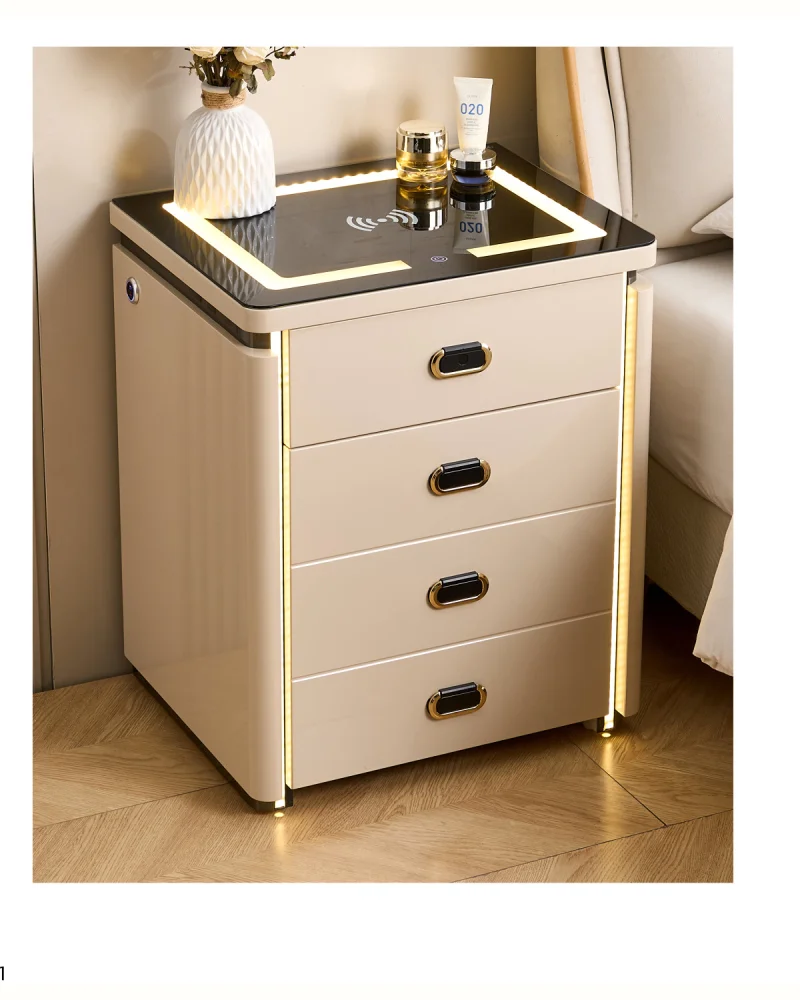
- Core SKU: a model with the strongest expected volume, usually with LED light, drawer storage and a balanced size for retail or ecommerce channels.
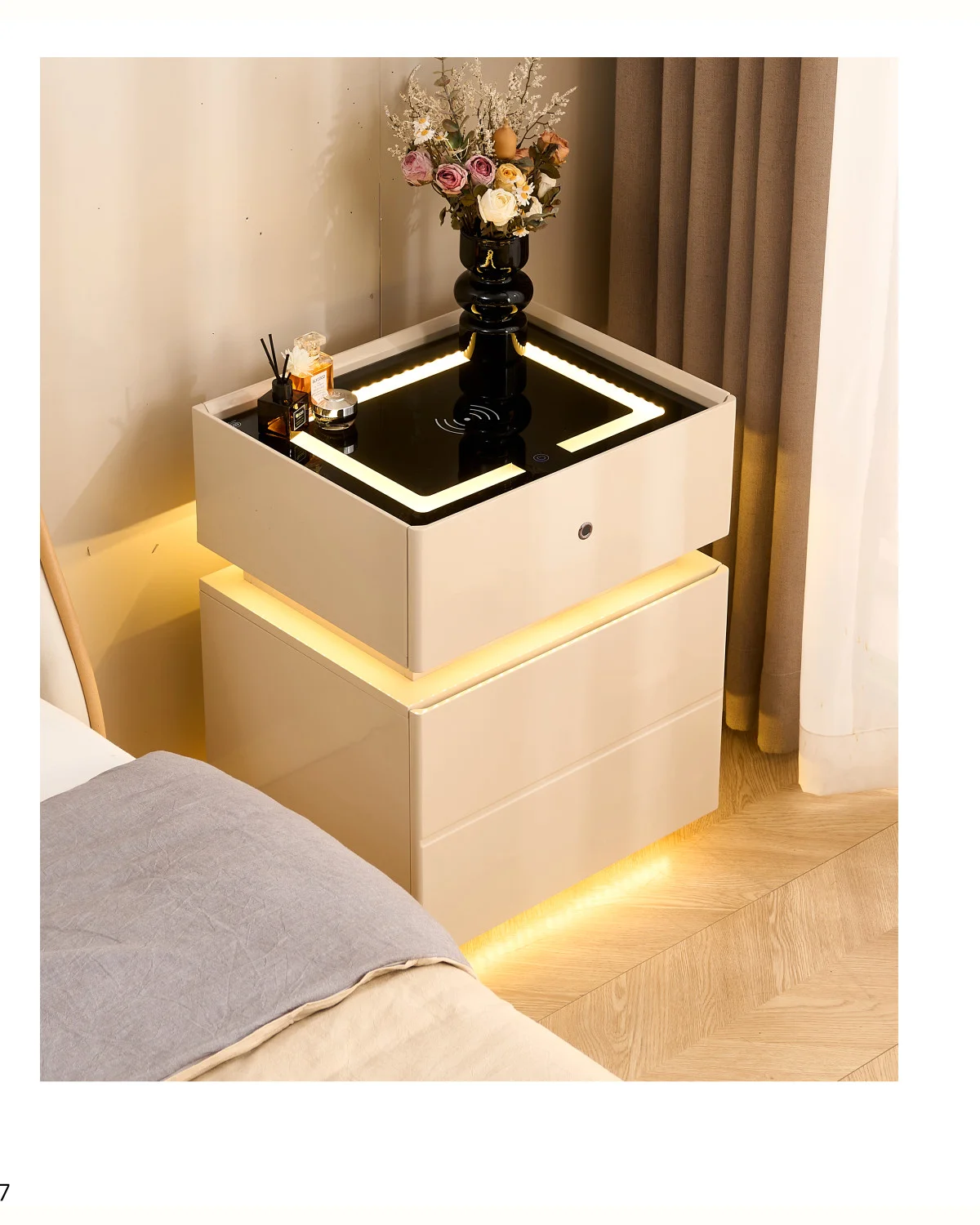
- Feature SKU: a higher-positioned model with wireless charging, speaker, safe storage, floating-look design or vanity function.
This mix gives the buyer price coverage without overloading the first container. For example, a compact 30cm model can support smaller rooms and online channels, while a 50cm model such as the 50cm smart nightstand with LED side lights can become the core reference for a broader range.
Do not let the first order become too wide
The main risk in a first smart nightstand order is not lack of choice. The bigger risk is too many colors, functions and carton types before the buyer knows which SKU will repeat. A factory quotation becomes clearer when the buyer limits the first order to a controlled model mix and asks for optional upgrades separately.
A useful starting point is to keep two or three finish directions, one standard carton structure and one core instruction manual format. Buyers can then review whether higher-end functions should be added after sample testing. If a differentiated model is needed, a product such as the 50cm floating-look smart nightstand can be used as the feature SKU rather than forcing every model to carry the same premium configuration.
Plan samples as a decision tool, not a formality
Sample approval should answer practical commercial questions. Does the carton protect corners well enough for the target route? Is the drawer runner smooth after repeated opening? Does the wireless charging position match the product photo and user expectation? Is the LED color temperature acceptable for the target market? Can the finish be repeated on a later production batch?
For smart models, sample checks should include both furniture details and electronic details. A buyer should record LED performance, charging result, adapter requirement, cable position, switch logic, packaging mark and instruction clarity. These notes make the final quotation more precise and reduce arguments after production starts.
What to include in the first RFQ
A factory can quote more accurately when the buyer sends enough commercial context. Instead of asking only for FOB price, include target market, estimated first order quantity, sales channel, preferred carton style, finish direction, smart functions and whether private label packaging is required.
If your team is still organizing those details, use the checklist in How to Prepare a Nightstand RFQ for a Chinese Factory. For buyers planning logo, carton artwork or exclusive configuration, the OEM/ODM nightstand support page is also a better starting point than sending a vague product screenshot.
Keep the first range easy to repeat
The best first smart nightstand assortment is not the one with the most functions. It is the one a buyer can reorder, explain to the sales channel and control during production. Start with a clear SKU ladder, confirm samples against real selling conditions, and keep private label or feature upgrades connected to expected volume.
For importers, this makes the factory discussion more productive. For wholesalers and ecommerce sellers, it creates a range that can be tested, improved and repeated instead of becoming a one-time mixed order.