A useful nightstand RFQ does more than ask a factory for a price. It tells the supplier what kind of order you are building, which details are fixed, which details still need advice, and what evidence you expect before sample approval or bulk production.
For a Chinese factory, a clear RFQ can shorten quotation time, reduce back-and-forth messages, and prevent the supplier from quoting the wrong structure. If the buyer is still deciding whether the order is a standard model, a modified SKU, or a private-label program, it helps to review the OEM/ODM cooperation process before sending the first request.

Start with the buying scenario
The first section of the RFQ should explain who will buy or use the nightstand. A hotel project, an ecommerce launch, a retail-chain program, and a wholesale container do not need the same quotation logic.
For hotel and apartment projects, include room quantity, room type, delivery phase, spare-unit expectation, and any site limitation such as socket position or cleaning clearance. If the buyer is preparing a hospitality file, the hotel application notes are a useful way to check whether the RFQ covers room operation rather than only product appearance.
For ecommerce or retail orders, the RFQ should include target selling channel, carton handling route, listing requirements, and whether the first order is expected to become a repeat program. This helps the factory decide how much attention to give to packaging, label control, SKU naming, and surface consistency.
Define the product direction before asking for a price
A factory cannot quote accurately from a mood-board image alone. The RFQ should identify the product direction: modern bedside cabinet, smart nightstand, storage-focused cabinet, hotel nightstand, vanity-style unit, floating model, or a fully customized product.
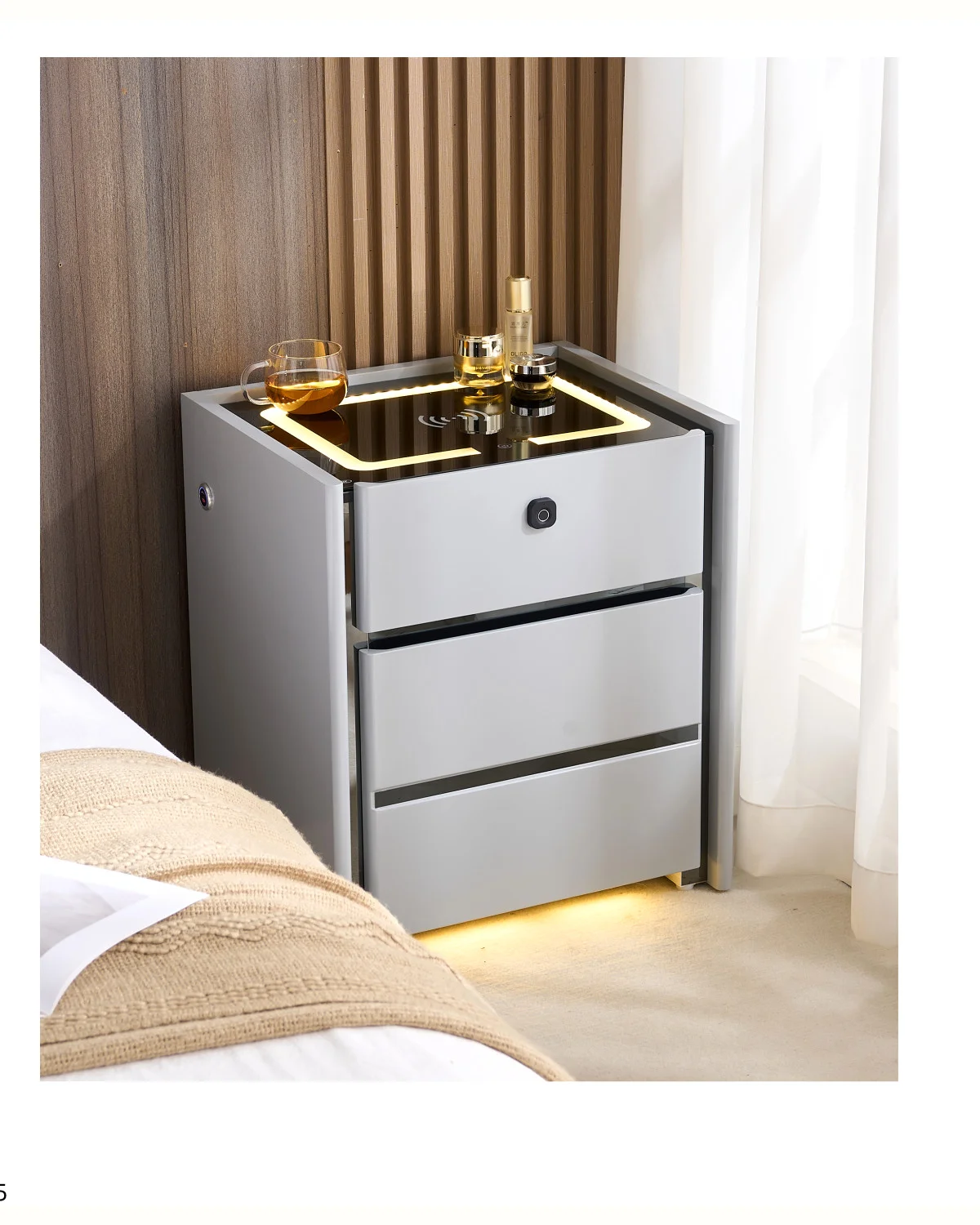
If the buyer already has a target style, link or attach a reference model and explain what should stay the same and what can change. For example, a buyer comparing connected functions can start from the smart nightstands range, while a buyer focused on drawer capacity may need to compare the structure with storage nightstands before increasing depth or drawer count.
The RFQ should also state whether the factory is expected to recommend a model. If the buyer only says “send your best price for a nightstand,” the supplier may quote a simple low-cost cabinet that does not match the sales plan. A stronger RFQ tells the factory the target customer, target room, expected function, and acceptable price band.
List dimensions, materials, finish, and hardware separately
Many quotation problems start when buyers combine several technical decisions into one short sentence. “White wood nightstand with drawers” is not enough for a factory quotation. The RFQ should separate size, board type, surface finish, edge treatment, drawer runner, handle, leg or base style, back panel, and any electrical module.
When the buyer is unsure about board or finish, the RFQ should ask the factory to quote options instead of guessing. A practical format is to request one standard option and one upgraded option, then compare them with the nightstand materials and finish guide. This gives the buyer a better reason to accept or reject a cost difference.
Hardware should be specified in the same file. Drawer runners, handles, charging modules, LED strips, locks, and adjustable feet all change the cost and complaint risk. For orders with moving parts or smart functions, the RFQ should ask how those components will be checked during sampling and before shipment.
Give quantity information in a way the factory can quote
Factories need quantity information to judge material purchasing, labor planning, and packing cost. A good RFQ should include estimated first-order quantity, expected repeat quantity, number of finishes or colors, number of SKUs, and whether the buyer needs mixed loading.
If the buyer is not ready to commit to one number, use quantity tiers. For example: 100 pieces for sample launch, 300 pieces for first container planning, and 500 pieces for repeat order evaluation. This lets the factory show where the price changes instead of giving one number that may not hold later.
MOQ should also be discussed openly. A buyer asking for several colors, custom cartons, special hardware, and low quantity may create a quotation that is technically possible but commercially weak. When the RFQ shows the buyer’s launch plan, the factory can suggest which details should wait until the second order.
Include packaging and shipping requirements early
Packaging should not be left until after the product price is confirmed. The carton method, inner protection, accessory bag, instruction sheet, barcode label, drop-test need, and loading plan all affect cost and lead time.
If the order will go into retail or ecommerce, the RFQ should ask whether the supplier can prepare carton marks, barcode positions, and opening experience for that route. The retail-ready packaging guide and the export packaging guide can be used together when the buyer needs both warehouse handling and ocean-shipment protection.
For KD or flat-pack styles, the RFQ should ask for packed size, assembly sequence, hardware bag control, and instruction-sheet plan. A smaller carton is useful only if the buyer can avoid missing parts, scratched panels, and unclear assembly after delivery.
Ask for the right evidence with the quotation
An RFQ should not only ask for unit price and lead time. It should ask the supplier what evidence will be available before the buyer approves a sample or shipment.
Useful evidence includes material photos, finish board photos, hardware specification, packed-unit photos, carton structure, loading estimate, sample timeline, and inspection checkpoints. If the order has quality-sensitive details, the buyer should connect the RFQ to the pre-shipment quality check points before finalizing the quotation.
This is also where supplier quality becomes visible. A capable supplier will explain what can be controlled and what needs confirmation. If the factory cannot explain finish stability, runner grade, carton protection, or sampling sequence, the buyer may need to review the supplier fit before moving forward.
Keep the RFQ easy to answer
A strong RFQ is detailed, but it should not be confusing. Use sections, tables, and clear attachments. Put essential quotation requirements in the main file, and place reference photos, drawings, logos, carton marks, or compliance notes in labeled attachments.
The buyer should also mark which details are fixed and which details need factory recommendation. For example, the outer size may be fixed by the room plan, but board type and drawer runner grade may be open for factory advice. This helps the supplier quote practical options instead of forcing one risky answer.
RFQ checklist for nightstand buyers
Before sending the RFQ, check whether it includes buyer scenario, target sales channel, product direction, dimensions, materials, finish, hardware, smart functions, quantity tiers, packaging route, sample expectation, quality evidence, target delivery time, and required documents.
If the RFQ is for a new factory, also ask for company background, production focus, similar nightstand experience, sample record, and communication process. These points connect naturally with the broader question of how to choose a nightstand supplier, because a quotation is only useful when the supplier can actually control the order behind it.
The goal is not to make the RFQ long. The goal is to make it clear enough that the factory can quote the right product, explain the right trade-offs, and prepare the right sample without guessing what the buyer really wants.