Modern bedroom finishes usually look simple on the surface, but the sourcing decision is detailed. Matte neutrals, warm wood, soft grey, and dark accents all create different photography, cleaning, and reorder risks.
When the first SKU is meant to anchor a clean modern bedroom line, the finish should be tested against the actual modern nightstands the buyer plans to quote, not only against a mood-board image. If the color family is still open, use the EU and US color planning guide to decide whether the range needs a safer neutral, a warmer wood tone, or a darker accent.
Modern finishes need restraint
Modern bedroom finishes usually work best when the palette is controlled. Light oak, warm walnut, matte white, soft grey, and black accents can all be modern, but mixing too many directions in one collection weakens the range.
Buyers should decide whether the collection should feel warm, minimal, luxury, compact, or hotel-oriented. That decision guides finish, handle, and panel choices.
Use the nightstand as the test SKU
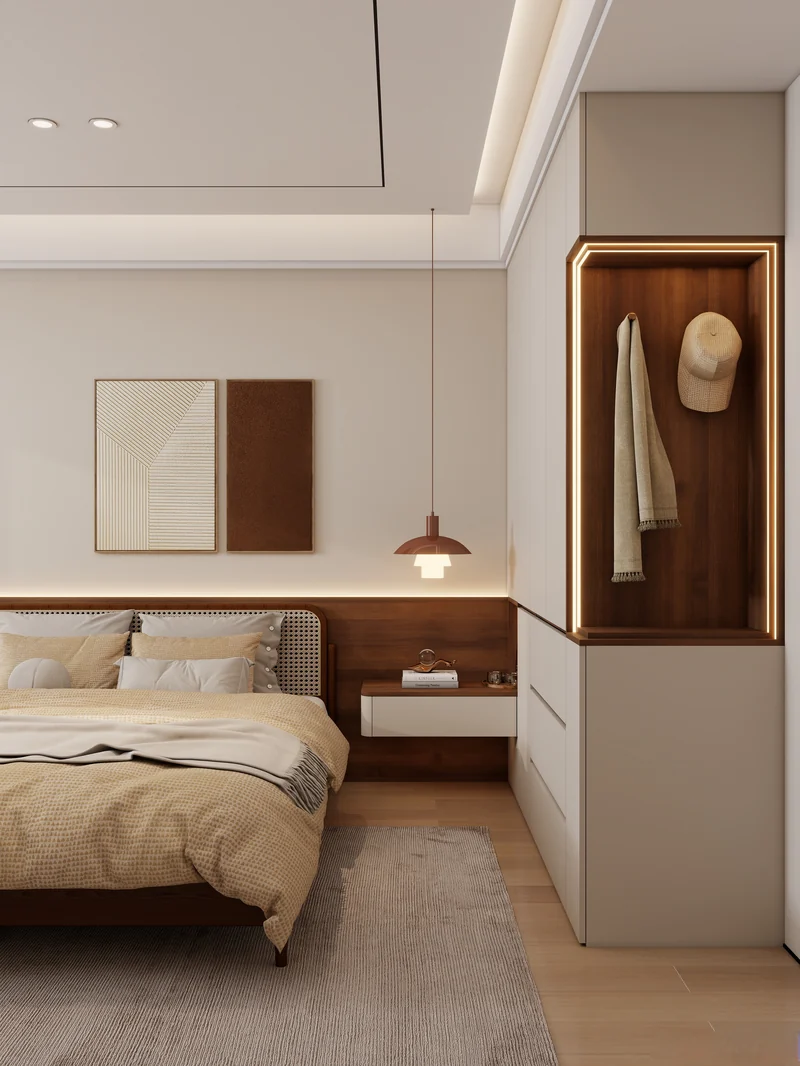
The nightstand is a useful first SKU for testing a modern finish. It is smaller than a dresser or wardrobe, but it still shows the top, drawer front, side panel, handle, and edge treatment.
If the finish works on the nightstand, the buyer can extend it to related items. If it fails, the cost of changing direction is lower than changing a full collection.
Watch the details around edges
Modern designs often have clean lines, so small defects are more visible. Uneven gaps, rough edges, color mismatch, or poor handle alignment can make the product look cheaper than intended.
QC should focus on these details before judging the final style. A modern finish is only convincing when the execution is clean.
Keep the modern range recognizable
Modern ranges become stronger when buyers repeat a few visual rules. For example, use one wood tone, one metal accent, and one main surface texture across several bedroom pieces. The nightstand can carry those rules in a compact and easy-to-sample form.
If the buyer wants a bolder accent, test it on handles, legs, or a top detail before changing the whole cabinet color. This keeps the collection modern without making repeat production harder.
Modern Style Depends on Proportion
A modern finish works only when the cabinet proportion supports it. Wide drawer fronts, slim handles, floating details, and clean side panels can make a simple finish look premium. Poor gaps or heavy handles can make the same finish look cheap.
When reviewing a modern sample, check the relationship between finish, handle, and cabinet shape. Do not approve color in isolation.
Build a Repeatable Modern Palette
For a wholesale collection, choose one main finish and one controlled accent before adding more colors. A stable palette helps buyers photograph, list, and reorder the range.
If a buyer wants a trend color, use it as a limited option or on a small detail first. The core finish should remain easy to produce in later orders.
How to choose safely
Send room references and target price band before asking for samples. A supplier can recommend which modern finish is stable for bulk production and which visual effect needs a special process or higher MOQ.
Modern does not mean one color family
A modern bedroom can use light oak, warm walnut, soft white, stone grey, black accents, or mixed metal details. The finish direction should support the room mood without making every item look identical.
For a collection, choose one main finish and one controlled accent. Too many finishes in the first order increase sample work, photography cost, and reorder risk. A narrower palette usually gives better commercial control.
Use the finish to connect the room
The nightstand finish should connect bed fabric, flooring, wardrobe color, and lighting temperature. A warm wood finish can soften a minimal room, while matte white or grey can support a compact apartment style. Black accents may work well, but they need stronger surface control.
Before approving the final finish, place the nightstand sample beside the intended bed or at least compare it with the main bedroom materials. A finish chosen alone can look disconnected once the full room is assembled.