Nightstand hardware affects the way the product feels every day. Handles, drawer runners, hinges, cable outlets, charging modules, and adjustable feet can change cost, assembly time, and complaint risk.
Hardware should be part of the specification file instead of a factory default. When a project includes charging modules, sensor lights, locks, or heavier drawers, start from the relevant smart nightstands and then use the drawer runner guide to make sure the moving parts match the function promise.
Hardware defines the user feel
Customers touch the drawer runner, handle, hinge, charging module, or lock before they judge many hidden details. A good finish cannot compensate for a drawer that feels rough or a handle that becomes loose.
Hardware should be chosen by product level. A cost-focused wholesale item, hotel nightstand, and premium private-label model should not automatically use the same runner or handle.
Match runner type to drawer use
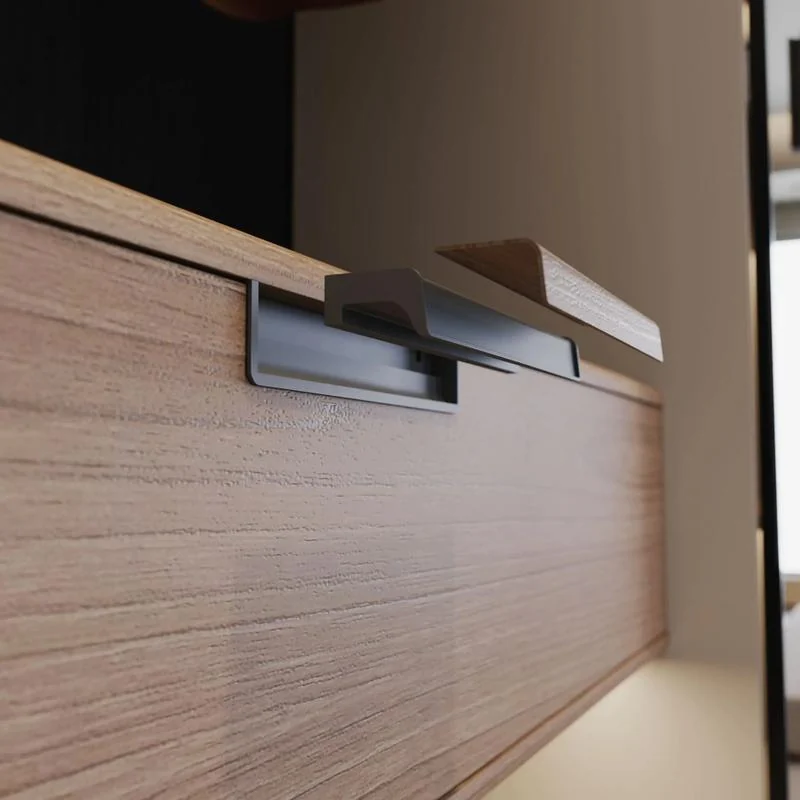
Basic runners may be enough for lightweight drawers. Soft-close runners can improve perceived value. Full-extension runners are useful when access matters, but they may raise cost and require better installation control.
The buyer should confirm drawer size, expected load, opening feel, and noise level. Those details are more useful than asking for “good hardware” in general.
Check installation, not only component quality
A good runner can perform badly if the cabinet is not square or the installation tolerance is poor. Inspection should include drawer gap, opening force, closing sound, and repeated movement after final assembly.
For smart hardware, check cable routing, heat, and maintenance access. Electrical parts should be tested as part of the furniture, not only as loose components.
Do not buy hardware by name only
Terms such as soft-close, full-extension, or premium handle are not enough. The buyer should ask for runner load, extension length, handle material, plating finish, screw type, and replacement availability.
For project buyers, spare hardware can be important. A hotel or apartment operator may need replacement handles or runners later, so the supplier should confirm whether the same hardware can be sourced again.
Hardware Should Match the Price Tier
A value SKU does not need the same hardware as a premium hotel model, but every tier needs a clear standard. The buyer should define what the user must feel: basic movement, soft closing, full extension, quiet use, or easy replacement.
This decision affects drawer box design, screw positions, inspection steps, and after-sales support. Hardware is not a last-minute accessory.
Questions for Runner and Handle Approval
Ask for runner type, load expectation, extension length, screw position, handle material, finish, and spare part availability. These details help compare suppliers more accurately.
During sample review, request a short drawer movement video. Sound and closing behavior are easier to judge in video than in still photos.
Supplier questions to ask
Ask what runner grade is included, whether spare parts are available, how handles are packed, and how drawer movement is checked before shipment. These answers show whether the supplier treats hardware as a quality point or only as a cost item.
Hardware should match the claim level
If the sales page describes the nightstand as premium, the drawer runner, handle feel, and closing sound must support that claim. A good-looking cabinet with weak hardware creates negative reviews quickly.
For value-focused programs, the buyer can still protect the experience by choosing a simple, stable runner and a handle that is easy to tighten or replace. The cheapest hardware is not always the lowest total cost.
Ask for replacement logic
Importers should ask whether handles, runners, chargers, and feet can be replaced later. A small spare-parts plan is useful for hotel projects, distributors, and ecommerce sellers managing after-sales service.
Small hardware details affect reviews
Customers notice whether a handle feels sharp, whether a drawer opens evenly, whether a charging port is easy to reach, and whether the nightstand stands level on the floor. These details are small in the quotation but large in user feedback.
For each hardware item, the buyer should ask for a photo, material description, function note, and replacement option. This is especially useful when the nightstand is sold online and after-sales teams need to solve problems without opening a new development discussion.